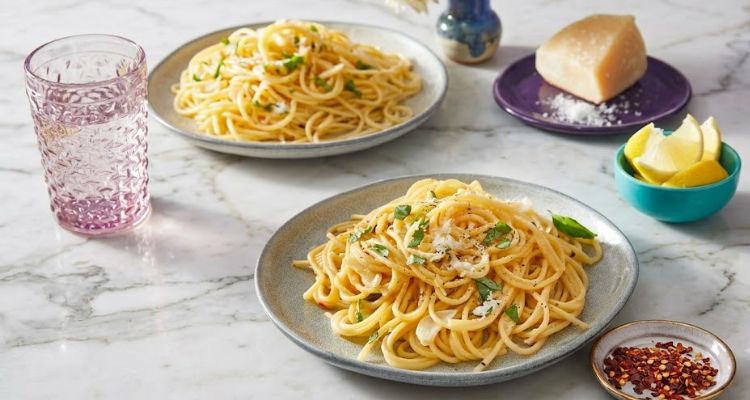
Pioneer Woman lemon pasta cooks spaghetti directly in a garlic-infused pot with just 6 cups of water, so the starch builds the sauce as the pasta simmers. And from The Pioneer Woman, it serves 4 to 6 at around 475 calories in about 25 minutes, since nothing drains and the whole dish finishes in one pot.
Where a traditional pasta al limone emulsifies butter and Parmesan with reserved pasta water in a separate step, this recipe skips that entirely by cooking the spaghetti in the sauce from the start. That one-pot method concentrates the starch into the liquid as it reduces, which creates a creamy coating without any heavy cream.
Stirring the Parmesan, lemon zest, and juice in after the pot comes off the heat is the step that keeps the sauce silky, because adding cheese to boiling liquid causes it to seize into clumps. Pull the pot from the burner first, so the residual heat melts the Parmesan smoothly into the starchy base.
Source: The Pioneer Woman website
Pioneer Woman Lemon Pasta
Course: Pasta4
servings30
minutes40
minutes300
kcalGarlic and red pepper flakes bloom in butter and olive oil before spaghetti and salted water go straight into the same pot. Then 8 to 10 minutes of frequent stirring cooks the pasta al dente while the water reduces into a starchy sauce. And Parmesan, lemon zest, lemon juice, and fresh basil stir in off the heat, so the one-pot dinner hits the table without a single colander.
Ingredients
- For the pasta:
2 Tbsp olive oil
2 Tbsp unsalted butter
4 garlic cloves, thinly sliced
1/4 tsp red pepper flakes
1 lb uncooked spaghetti
2 tsp kosher salt
- For finishing:
1/2 cup grated Parmesan cheese, plus more for serving
2 Tbsp fresh lemon zest
1/4 cup fresh lemon juice
1/4 cup chopped fresh basil, plus more for serving
Freshly ground black pepper, for serving
Directions
- Heat the fat: In a large pot over medium heat, add the olive oil and butter, then let the butter foam before adding anything else.
- Bloom the garlic: Add the sliced garlic and red pepper flakes, then cook about 1 minute until fragrant, since burned garlic turns bitter and there is no fixing it.
- Add the pasta and water: Pour in 6 cups of water, add the spaghetti and salt, then bring everything to a simmer.
- Cook and stir: Reduce the heat to medium-low and simmer 8 to 10 minutes, stirring frequently to keep the pasta from sticking, because the low water level means strands clump together fast.
. - Check the texture: The pasta is ready when it is al dente and the water has reduced to a starchy, silky sauce that clings to the spaghetti.
- Finish off the heat: Remove the pot from the burner, then stir in the Parmesan, lemon zest, lemon juice, and basil, since the residual heat melts the cheese without breaking the sauce.
- Serve: Plate immediately and top with more Parmesan, fresh basil, and plenty of black pepper
FAQs
Why does the pasta cook in only 6 cups of water instead of a full pot?
Less water means the starch released by the spaghetti stays concentrated instead of diluting into a huge pot. That concentrated starch is what turns the cooking liquid into a creamy sauce, so by the time the pasta is al dente, the sauce is already built around it.
Stirring frequently matters more here than with traditional boiling, because the pasta sits closer together in less liquid and sticks if left alone. A few turns every minute or so keeps the strands separate and distributes the starch evenly.
Why do the lemon and Parmesan go in after the heat is off?
Parmesan clumps and turns grainy in boiling liquid, because the proteins seize up at high temperatures. Stirring it in off the heat lets the cheese melt gently into the starchy sauce, so it coats each strand instead of forming lumps.
Fresh lemon juice also loses its brightness when it hits a boiling pot, since the heat cooks off the volatile oils that give it that sharp, clean flavor. Adding both the zest and juice at the end preserves the citrus punch that defines this dish.
Can I use bottled lemon juice instead of fresh?
Fresh lemon juice is noticeably brighter and more complex than bottled, and since lemon is the star flavor here, the swap is hard to hide. Bottled juice works in a pinch, but the finished dish tastes flatter and less vibrant.
You also need fresh lemon zest, which means you need a whole lemon anyway. Zest it first before juicing, because a juiced lemon is slippery and hard to grate. Two large lemons should give you enough for the 2 tablespoons of zest and 1/4 cup of juice.
What protein or vegetables can I add?
Grilled shrimp or seared chicken breast sliced on top both pair well, since the lemon and Parmesan sauce complements both proteins without competing. Cook the protein separately and add it at the end, because crowding raw meat into the pasta pot disrupts the starch-to-sauce ratio.
Arugula or baby spinach tossed in at the last second wilts from the residual heat and adds a peppery or earthy green to balance the bright citrus. For another Pioneer Woman one-pot pasta to rotate through the week, the Pioneer Woman spaghetti sauce takes a heartier approach with a slower-cooked red sauce.
How should I store leftovers?
The pasta keeps in an airtight container in the fridge for up to 3 days, and it reheats well with a splash of water over low heat to loosen the sauce. The starch thickens as it cools, so that extra liquid brings back the silky texture.
Microwaving works for individual portions, though the stovetop gives you more control over the final consistency. Squeeze a little fresh lemon juice over reheated portions, since the citrus flavor fades after a day in the fridge. And for another Pioneer Woman weeknight pasta that stores and reheats well, try the Pioneer Woman fettuccine alfredo.