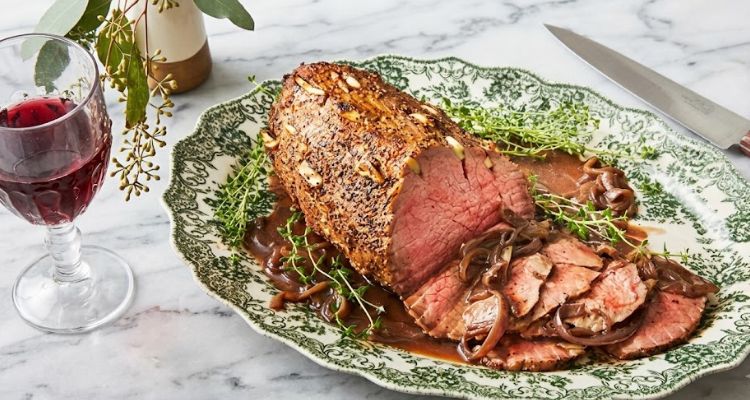
Pioneer Woman roast beef studs a 4-pound eye of round with garlic slivers, coats it in a peppery brown sugar rub, then roasts it over onions and red wine at two temperatures. And the recipe serves 8 to 10 at around 375 calories in about 2 hours and 10 minutes, since the beef rests at room temperature for an hour before it even hits the oven.
The recipe roasts the beef at 475°F for just 15 minutes first, then drops to 275°F for the rest of the cook, which is the opposite of how most home cooks handle a roast. That initial blast caramelizes the seasoned surface into a crust, while the low finish cooks the lean eye of round gently enough to keep it from drying out.
Pulling the roast at 120°F inside feels dangerously early, but carryover heat pushes the temperature up to 132°F during the 15-minute rest. Skip that rest and cut too soon, so the juices pour onto the cutting board instead of staying in the meat where they belong.
Source: The Pioneer Woman website
Pioneer Woman Roast Beef
Course: Beef, DinnerCuisine: AmericanDifficulty: Easy10
servings10
minutes1
hour375
kcalGarlic slivers tuck into slits cut across the roast, then a rub of seasoned salt, brown sugar, and black pepper coats the outside. The beef sits on a bed of sliced onions, thyme, and red wine in a cast-iron skillet before roasting at two temperatures. And the pan drippings, onions, and wine whisk with beef stock and flour into a quick gravy while the roast rests.
Ingredients
- For the garlic and rub:
4 lb eye of round roast
4 cloves garlic
1 Tbsp seasoned salt
1 1/2 tsp brown sugar
2 tsp ground black pepper
1 Tbsp olive oil
- For the roasting base:
2 Tbsp butter, cut into thin slices
1 onion, thinly sliced
8 sprigs thyme
1 cup red wine
- For the pan sauce:
2 cups beef stock
1 Tbsp plus 1 tsp all-purpose flour
Directions
- Stud with garlic: Cut 12 slits all over the roast, then slice the garlic cloves lengthwise into 12 thin pieces and tuck one into each slit.
- Temper the meat: Let the roast rest at room temperature for 1 hour, since cold beef from the fridge cooks unevenly and the center stays raw while the outside overcooks.
- Preheat the oven: Set it to 475°F while the roast comes to temperature.
- Apply the rub: In a small bowl, mix the seasoned salt, brown sugar, and black pepper, then brush the roast with olive oil and coat all sides with the seasoning.
- Build the roasting base: Place the sliced onions and thyme sprigs in a large cast-iron skillet, then pour in the red wine, since it keeps the onions from scorching and builds the sauce as it reduces.
- Set the roast on top: Place the seasoned beef over the onions and scatter the butter slices across the top so they melt down and baste the surface.
- Blast at high heat: Roast at 475°F for 15 minutes to caramelize the rub into a brown crust.
- Drop and slow cook: Without opening the oven, reduce the temperature to 275°F and cook 45 to 60 minutes more, until a thermometer inserted in the center reads 120°F.
- Rest the roast: Transfer the beef to a plate, tent with foil, and let it rest for 15 minutes, because carryover heat brings the temperature up to about 132°F for medium rare.
- Make the pan sauce: While the beef rests, remove the thyme sprigs from the skillet, then whisk the beef stock and flour together until smooth and pour into the skillet.
- Simmer and thicken: Set the skillet on the stovetop over medium heat and bring the sauce to a simmer, then cook about 5 minutes until smooth and thickened.
- Slice and serve: Thinly slice the roast against the grain, then spoon the pan sauce over each serving.
FAQs
Why does the recipe use two oven temperatures?
The 475°F blast for the first 15 minutes caramelizes the brown sugar and seasoned salt on the surface into a dark, flavorful crust. Dropping to 275°F after that lets the lean eye of round cook gently, so the interior stays pink and juicy instead of turning gray and tough.
Cooking at a single moderate temperature the whole time would leave the surface pale and underseasoned, because the rub needs intense heat to brown. And staying at high heat the entire cook would dry out this lean cut long before the center reaches 120°F.
Why pull the roast at 120°F when medium rare is 130-135°F?
Carryover cooking raises the internal temperature by 10 to 12 degrees during the 15-minute rest, so pulling at 120°F lands you at about 132°F when you slice. If you wait until the thermometer reads 130°F in the oven, the finished roast will be closer to 140°F and solidly medium.
A meat thermometer is essential here because eye of round is too thick to judge doneness by feel or timing alone. Check the temperature at the 45-minute mark, then every 5 to 10 minutes after, since oven temperatures vary.
What does the red wine do in the pan?
The wine keeps the sliced onions and thyme from scorching on the bottom of the hot cast-iron skillet during the long roast. As it reduces, it concentrates into a syrupy base that mixes with the beef drippings, so the pan sauce practically makes itself.
Dry red wines like Cabernet Sauvignon or Merlot work best, because their tannins and acidity complement beef. Avoid sweet wines, since they turn the sauce cloying instead of savory. For another Pioneer Woman recipe that uses red wine to build a braising liquid, try the Pioneer Woman slow cooker beef stew.
What can I do with leftovers?
Thinly sliced leftover roast beef makes excellent hot sandwiches, and Ree Drummond specifically recommends her melty roast beef sandwich recipe. Cold slices layered on crusty bread with horseradish and arugula work well for lunch, since the lean meat stays tender when chilled.
Diced leftovers can go into beef stew, pot pie, or a breakfast hash with sweet potatoes. Store the sliced beef in an airtight container with a spoonful of pan sauce poured over it, because the sauce keeps the lean meat from drying out in the fridge for up to 4 days.
What sides pair well with this roast?
Mashed potatoes are the classic match, since they soak up the red wine pan sauce better than any other side. Roasted root vegetables or a creamy gratin also work, because the richness of the sauce needs something starchy to anchor the plate.
A simple green salad with a sharp vinaigrette rounds things out, since the meal is heavy enough on its own. And for another Pioneer Woman recipe designed to pair with this kind of dinner, try the Pioneer Woman green bean casserole for a holiday table spread.