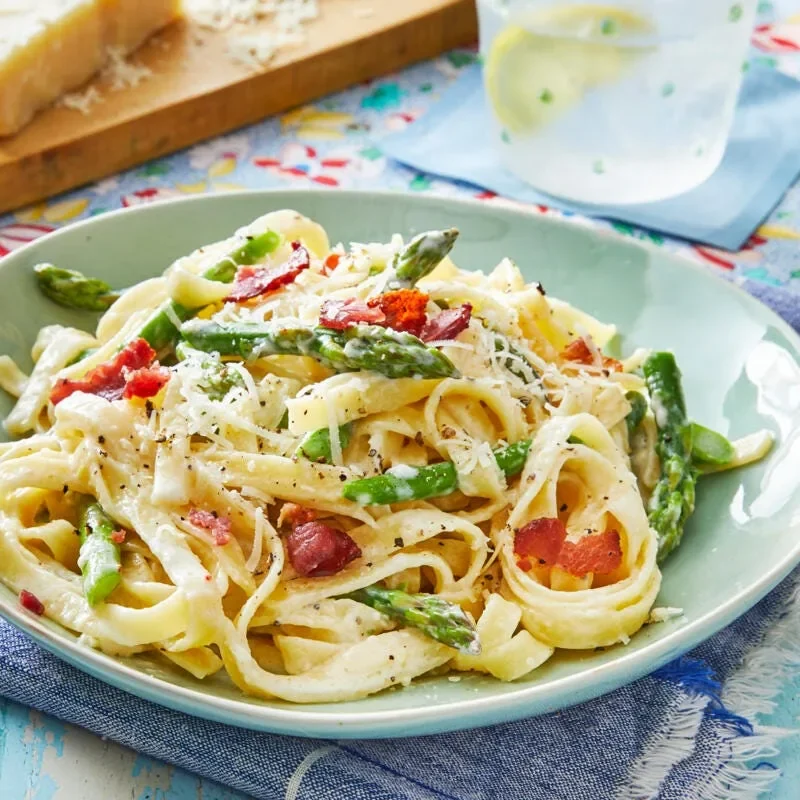
Pioneer woman asparagus pasta is a quick dinner made with crispy bacon, fresh asparagus and a lemony parmesan cream sauce, ready in just 30 minutes. That makes it a go-to for weeknight dinners, spring date nights or Sunday lunches, since the bright lemon cuts right through the rich, buttery sauce.
Stirring the first cup of parmesan into the cream before the pasta goes in is the step that builds a sauce instead of a topping. Without it, the cheese clumps on the hot noodles and you lose that smooth, clingy coat.
Cooking the asparagus right in the boiling pasta water saves a pan and gives the spears a quick blanch that keeps them snappy. That same saucepan from the bacon handles the cream sauce next, so you only need two pots for the whole dinner.

Pioneer Woman Asparagus Pasta
Course: DinnerCuisine: American, ItalianDifficulty: Easy4
servings15
minutes15
minutes1100
kcalBacon and asparagus fettuccine coated in a lemon-parmesan cream, tossed together in a warm serving bowl so the cheese wraps around every noodle.
Ingredients
4 slices bacon, chopped
1 lb. fettuccine pasta
12 oz. medium-width asparagus spears, trimmed and cut crosswise into 2-inch pieces
1 c. heavy cream
1/2 c. unsalted butter
1/2 tsp. kosher salt, plus more for pasta water
1/2 tsp. black pepper, plus more for garnish
2 c. freshly grated parmesan cheese, divided, plus more for garnish
1/2 tsp. lemon zest
1 tbsp. lemon juice
Directions
- Crisp the bacon: Cook the chopped bacon in a saucepan over medium heat, stirring occasionally, until crisp and rendered, 8 to 12 minutes, then transfer to a paper towel-lined plate with a slotted spoon and wipe the pan clean.
- Boil the pasta: Bring a large pot of salted water to a boil over medium-high heat and cook the fettuccine according to package directions, adding the asparagus pieces during the last 2 minutes, then reserve 1/2 cup of pasta water before draining.
- Warm the cream sauce: While the pasta cooks, heat the heavy cream and butter in the same saucepan over medium heat until hot, then season with the salt and pepper.
- Build the base: Add 1 cup of the parmesan and the lemon zest to a large serving bowl, then stir in the hot cream mixture until the cheese starts to melt.
- Toss and serve: Pour the drained pasta and asparagus into the bowl and toss a few times to coat, then add the lemon juice and remaining 1 cup of parmesan and toss again, thinning with reserved pasta water as needed before garnishing with bacon, pepper and cheese.
FAQs
How long does asparagus pasta keep in the fridge?
Store it in a sealed container for up to 3 days, though the asparagus softens as it sits. When you reheat, warm it in a skillet over medium-low with a splash of cream since the sauce firms up in the fridge.
Can I make this pasta ahead of time?
You can cook the bacon and prep the asparagus a day ahead, which cuts active time down to boiling pasta and stirring sauce. But tossing the full dish in advance won’t work, because the noodles soak up the cream and lose their glossy coat.
Can I use a different pasta shape instead of fettuccine?
Wide, flat noodles like pappardelle or tagliatelle work best because the cream clings to their broad surface. If you only have penne or rigatoni, they’ll work, but you’ll lose some of that twirl-and-coat texture.
Do I need a large serving bowl or can I toss it in the pot?
A wide serving bowl gives the cheese room to melt into the cream before the hot pasta arrives. If you toss in the pot, the direct heat can seize the parmesan instead of letting it melt into a smooth sauce.
What is the most common mistake when making this pasta?
Letting the pasta cool before tossing is what usually goes wrong, because the noodles need to be hot when they hit the cheese and cream. Once they cool even slightly, the parmesan won’t melt and you end up with grainy clumps instead of a smooth coat.