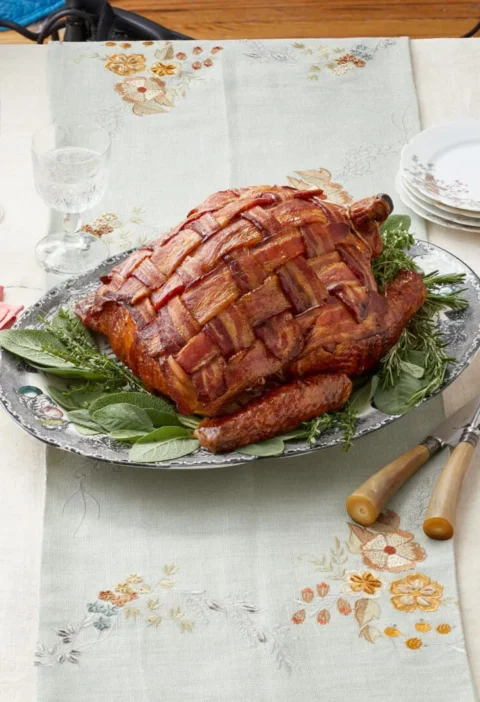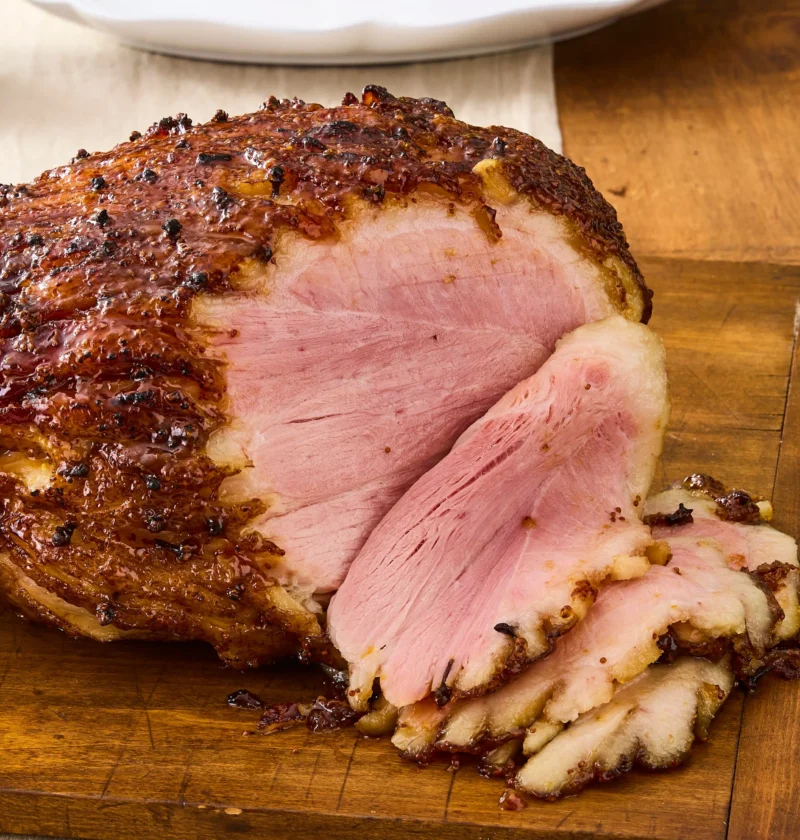
Pioneer Woman apricot and mustard glazed ham is an easy holiday main dish made with bone-in ham, apricot preserves and whole grain mustard. It’s ready in under four hours, which makes it a go-to for Easter dinner, Christmas or Sunday brunch, since the glaze caramelizes on its own.
Scoring the ham in diamond cuts is what makes the glaze work, because those grooves give the apricot-mustard mixture a place to settle. Without them, the glaze slides off and you end up with plain baked ham instead of a caramelized centerpiece.
What sets this glaze apart from the typical brown sugar and pineapple combo is the sharp edge from apple cider vinegar and ground ginger. Those two ingredients keep the sweetness from taking over, so every bite has a tangy backbone that pairs well with the salty ham.

Pioneer Woman Apricot and Mustard Glazed Ham
Course: DinnerCuisine: AmericanDifficulty: Medium8
servings20
minutes3
hours1817
kcalA bone-in ham gets scored and studded with cloves, then baked low and slow before a sticky apricot-mustard glaze goes on during the last hour.
Ingredients
1 (12- to 15-pound) fully cooked bone-in ham
Whole cloves
1 c. apricot preserves
1/4 c. whole grain mustard
1/4 c. light brown sugar
3 tbsp. apple cider vinegar
1 tsp. ground ginger
Directions
- Preheat and score: Preheat the oven to 325°F, then score the surface of the ham with a sharp knife in a diamond pattern about 1/4 inch deep. Once scored, stick whole cloves in between the diamonds.
- Tent and bake: Once scored, place the ham on a rack in a large roasting pan, tent with foil and bake until warmed through, about 2 hours.
- Make the glaze: While the ham bakes, combine the apricot preserves, mustard, brown sugar, apple cider vinegar and ground ginger in a small saucepan. Then cook over medium heat, stirring frequently, until the glaze thickens, 10 to 12 minutes.
- Glaze the ham: After 2 hours, remove the ham from the oven and uncover it, then brush half the glaze over the surface and into the scored lines. Once glazed, return it to the oven uncovered and bake about 1 hour, brushing with more glaze every 20 minutes until glossy.
- Rest and carve: After the final hour, remove the ham and let it rest 15 to 20 minutes before carving, so the juices redistribute.
FAQs
What can I use instead of apricot preserves in this glaze?
Peach preserves or orange marmalade both work as a swap, since they bring a similar fruity sweetness that pairs well with the mustard. Honey works too, though it leans more floral than fruity, so add an extra tablespoon of vinegar to keep the balance.
Can I freeze leftover glazed ham?
Leftover glazed ham freezes well for up to two months when wrapped tightly in plastic wrap and foil. Then thaw it overnight in the fridge before reheating, so the texture stays tender instead of turning rubbery.
Can I score and stud the ham with cloves the night before?
You can score the ham and push in the cloves up to a day ahead, then cover it tightly with plastic wrap and refrigerate. Pull it out about an hour before baking so it starts closer to room temperature, which helps it cook more evenly.
Do I need a roasting rack for this ham?
A roasting rack lifts the ham off the bottom of the pan so hot air circulates underneath and the glaze does not pool. If you don’t have one, crumple sheets of foil into a flat bed under the ham, since that lifts it the same way.
Why did my glaze burn instead of caramelizing?
The glaze burns when applied too early or if the oven runs above 325°F, so wait until the foil comes off for your first coat. Then brush in thin layers every 20 minutes during the final hour, because a thick coat all at once scorches before it can caramelize.