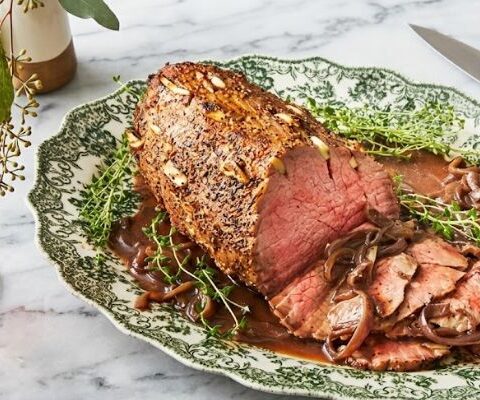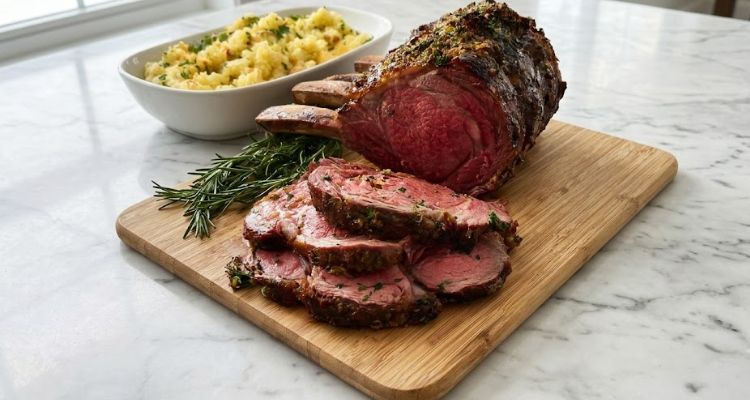
Pioneer Woman prime rib from Ree Drummond sears a whole rib eye roast, coats it in a crushed peppercorn and garlic rub, and roasts it in two stages at 500°F then 300°F. And the roast serves 12 at approximately 680 calories per serving in about 1 hour and 15 minutes, since a 20-minute rest follows the oven time.
Ree cuts the 14-pound roast in half before searing and roasts both halves separately on the same pan. So the heat circulates evenly around smaller pieces, which gives you more control over doneness than roasting one massive cut that cooks unevenly from edge to center.
Letting the roast sit at room temperature for 30 minutes to 1 hour before it goes into the oven is the step that prevents a cold center. And if you roast straight from the fridge, the outside overcooks to gray while the middle stays raw, because the temperature gap between surface and core is too wide for the oven to close evenly.
Source: The Pioneer Woman (thepioneerwoman.com)
Pioneer Woman Prime Rib
Course: BeefCuisine: AmericanDifficulty: Intermediate12
servings15
minutes1
hour680
kcalA halved rib eye roast sears in a hot skillet until dark golden before a rub of crushed peppercorns, rosemary, thyme, salt, and garlic presses into the oiled surface. Then 20 to 30 minutes at 500°F starts the crust, and a drop to 300°F finishes the roast to 125°F for medium-rare.
Ingredients
- For the roast:
1 whole rib eye roast (bone-in or boneless), about 14 lbs.
6 tablespoons olive oil, divided
- For the rub:
4 tablespoons tri-color peppercorns (or any peppercorns)
3 sprigs rosemary
3 sprigs thyme
1/2 cup kosher salt
1/2 cup minced garlic
Directions
- Temper the roast: Remove the rib eye from the fridge and let it sit at room temperature for 30 minutes to 1 hour.
. - Preheat the oven: Then heat to 500°F while the meat tempers.
- Cut the roast in half: Once tempered, split the rib eye into two equal halves for more even cooking.
- Sear both halves: Then heat a large heavy-bottomed skillet over very high heat, add 2 tablespoons oil, and sear each half until dark golden on all sides.
- Crush the peppercorns: While the meat rests from the sear, place the peppercorns in a bag and crush with a rolling pin.
- Strip the herbs: Then pull the rosemary and thyme leaves from the stems.
- Mix the rub: Once the herbs are stripped, combine the crushed peppercorns, rosemary, thyme, salt, and garlic.
- Coat the roast: Then pour the remaining 4 tablespoons olive oil over the seared halves and press the rub mix into the surface.
- Start at high heat: Once coated, roast at 500°F for 20 to 30 minutes to build the crust.
- Drop the temperature: Then reduce the oven to 300°F and continue roasting until a meat thermometer reads 125°F for medium-rare, about 30 to 50 more minutes.
- Rest before carving: Once the roast reaches temperature, remove from the oven and let rest at least 20 minutes before slicing
FAQs
Why does the recipe call for a meat thermometer?
Ree stresses on the source page that a thermometer is the only reliable way to hit your target doneness with prime rib. And oven temperatures, roast sizes, and starting meat temperatures all vary, so time alone cannot guarantee a consistent result.
Pull the roast at 120 to 125°F for rare to medium-rare, because the internal temperature rises another 5 to 10 degrees during the 20-minute rest. And anything past 130°F moves into medium territory, which dries out the marbled fat that makes prime rib worth the price.
Can I use a boneless rib eye roast?
Ree notes on the page that both bone-in and boneless work for this recipe. And boneless is easier to carve since you do not need to cut around the ribs, though it cooks slightly faster without the bone insulating the meat.
But bone-in roasts hold their shape better during the high-heat sear and add flavor to the drippings in the pan. So if you go boneless, check the thermometer about 10 minutes earlier than the recipe suggests, since the lack of bone speeds up the cook time.
What should I serve alongside prime rib?
Ree suggests creamy mashed potatoes, mushroom gravy, and Brussels sprouts with balsamic and cranberries on the source page. And those three sides cover starch, sauce, and vegetable without competing with the rich beef.
For a full Pioneer Woman holiday spread, the pioneer woman green bean casserole adds another side that can bake while the roast rests. But avoid heavy cream-based sides alongside the mashed potatoes, because the prime rib itself is already richly marbled.
How should I store and reheat leftovers?
Leftover prime rib keeps in an airtight container in the fridge for up to 3 days according to the source page. And Ree recommends slicing it thin and reheating in a baking dish with beef broth or gravy, covered in foil at 250°F for about 15 minutes.
That low temperature is critical, because higher heat pushes the already-cooked meat past medium and dries it out. And the broth creates steam under the foil, which keeps each slice moist instead of letting the surface tighten in the dry oven air.
Can I skip the sear and just roast the whole thing?
Searing builds the dark, caramelized crust that locks in juices and gives each slice that contrast between crispy outside and tender pink center. And without it, the surface stays pale and soft through both oven stages, so you lose the texture that makes prime rib look and taste impressive.
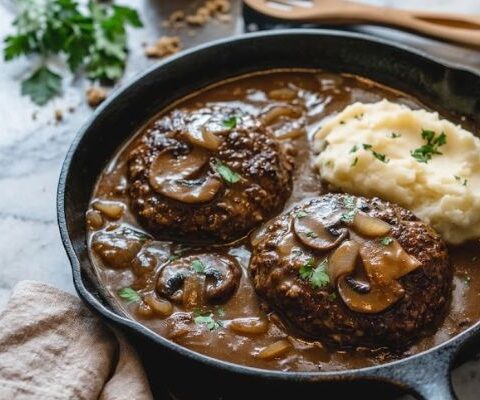
The same sear-first logic applies to the pioneer woman salisbury steak, where browning the patties before building the gravy creates the fond that flavors the sauce. So invest the 5 minutes of skillet time, because no amount of oven heat replicates the crust that direct contact with a screaming-hot pan produces.